
 Jan 09, 2026


Tired of spending money on disposable CR123A batteries for your high-powered flashlight or security camera? You’ve likely searched for a rechargeable CR123A alternative and stumbled upon the 16340 battery. It looks identical, but as many have learned, grabbing the wrong version can be a costly, device-frying mistake.
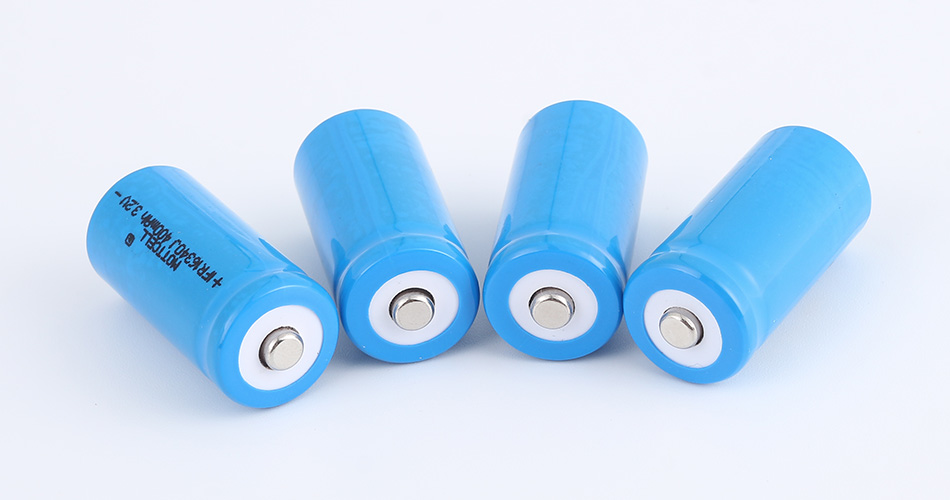
That string of numbers isn't some complex model code; it simply describes the 16340 battery dimensions. The battery is 16mm wide and 34mm long. In practice, this means it’s the exact physical size of the disposable CR123A you’re hoping to replace, as you can see in the photo.
This battery is also called an "RCR123A." So, what is an RCR123A battery? It’s just an industry nickname where the “R” simply stands for Rechargeable. Same battery, different label—the critical difference, as we'll see, isn't the name, but the voltage.
You've confirmed the 16340 battery fits perfectly into your device, so you're good to go, right? Not so fast. The most critical difference between these batteries isn't their size, but a property you can't see: their voltage.
Think of Voltage (V) as a measure of electrical "pressure." Just like using a high-pressure hose on a delicate plant, sending too much electrical pressure into an electronic device can cause permanent damage. This single detail is why you can’t just use any battery that fits.
Your standard disposable CR123A battery delivers 3.0 volts of pressure. In contrast, the most common rechargeable 16340s are a much more powerful 3.7 volts. Pushing that much extra "pressure" into a sensitive device like a security sensor or flashlight designed for 3.0V can easily destroy its internal electronics.
Because of this damaging voltage mismatch, a safer alternative was created. A special type of rechargeable 16340 uses a chemistry known as LiFePO4, which provides a much gentler 3.2 volts. This makes it a far better—and often the only safe—rechargeable option for 3.0V electronics.
That safer 3.2V battery we mentioned gets its user-friendly voltage from a special set of ingredients, or a battery chemistry, called LiFePO4 (Lithium Iron Phosphate). You can think of chemistry as the battery’s "recipe," and the LiFePO4 recipe is famous for being exceptionally stable and safe. It's the reason these batteries are a top choice for devices that can't handle the high "pressure" of a standard 3.7V rechargeable.
Beyond just being safer, this chemistry offers two other fantastic benefits. A high-quality LiFePO4 16340 battery simply lasts longer and performs more consistently than its counterparts.
Incredible Life Cycle: It can often be recharged over 1,000 times, easily tripling the 300-500 recharge cycles of many standard lithium-ion batteries.
Steady Power: It keeps the voltage stable as it drains, so your flashlight stays bright instead of slowly dimming over time.
This combination of safety, longevity, and steady performance makes the 3.2V LiFePO4 a smart and cost-effective replacement for disposable CR123A batteries. But while the chemistry itself is a huge step up in safety, there's one more critical feature to look for: a protection circuit.
Even with a safe chemistry, rechargeable batteries benefit from a final layer of defense. This is where a protection circuit comes in. Think of it as a tiny, built-in bodyguard for the battery cell, constantly monitoring for trouble. It automatically shuts the battery down if it detects dangerous conditions like being over-charged in the charger, drained too far during use, or a short circuit.
When shopping, you’ll see batteries labeled as "protected" versus "unprotected." For most consumer devices like high-power flashlights and cameras, choosing a protected cell is by far the safest option. This little circuit board is an essential safeguard that prevents common RCR123A battery problems, protecting both the battery’s lifespan and your valuable device from electrical damage.
Be aware that the protection circuit adds a few millimeters to the battery's length. While this isn't an issue for most modern gadgets, it can make for a tight fit in older or very compact devices. Always confirm your device can accommodate a slightly longer protected cell. Once you have the right fit, the next step is keeping it powered up.
Once you have the right battery, choosing the right 16340 charger is the most important step. You can’t use just any old charger; you must use a modern smart charger. These versatile devices are designed to handle various battery chemistries, which is essential for safely charging a specialized LiFePO4 16340 battery. They automatically detect voltage and have settings you can select for different battery types.
The critical rule is to select the correct charging mode. Before placing the battery in the charger, make sure you’ve set it to the LiFePO4 or 3.2V setting. Attempting to charge this battery on a standard Li-ion (3.7V) setting is the single most common and dangerous mistake; it will force too much power into the battery, permanently destroying the cell and creating a serious safety hazard.
As a final safety measure, always place your charger on a fire-resistant surface like a ceramic plate and avoid leaving it to charge completely unattended. With these simple habits, you’re ready to put everything together.
You can now confidently find the best rechargeable CR123A replacement for your flashlights and devices. To get started, follow this simple plan for RCR123A safety:
Check Your Device: Find its required voltage (V) in the manual or on the manufacturer's website.
Pick the Right Battery: Choose a protected 3.2V LiFePO4 cell, the safest match for most 3V devices.
Get the Right Charger: Use a smart charger that explicitly supports "LiFePO4" or "3.2V".
Remember the golden rule: always verify your device’s voltage first. You’re no longer just buying a battery; you’re making a smart, safe investment that saves money and reduces waste. That small power cell is now a choice you can make with complete confidence.
48V 300Ah HESS Supplier: Voltage, Runtime and OEM Guide
48V 100Ah HESS Supplier: 5.12kWh Solar OEM Buying Guide
12.8V 200Ah Battery Pack Factory: OEM Sourcing Guide
Commercial HESS Supplier: Factory Microgrid Sizing Guide
51.2V HESS Battery Supplier: 100Ah to 314Ah Capacity Guide
12V LiFePO4 Battery Pack Manufacturer: 50Ah-314Ah OEM Guide
16kWh HESS Supplier: 51.2V 314Ah Buyer’s Guide
5kWh HESS Supplier: Indoor Modular Battery Buying Guide
Established in 2005
In 2009, it was awarded the title of "National High tech Enterprise"
 zoe@mottcell.net
WhatsApp: 8617388790296
Fax: 86-0755-84042963
Skype: live:b0ebaecbb8782516
WeChat: +8613428749632

 VR show
 CN
CN Home >


