
 Jan 09, 2026


Have you ever switched on a high-powered flashlight and been amazed by a beam that seems impossibly bright for its size? Or perhaps you own a wireless security camera that runs for months on a single charge. The secret to that performance often isn’t a typical AA, but a small, stout workhorse called a 16340 battery. These tiny power plants are the hidden engines inside some of our most capable gadgets.
That number, 16340, isn't a random model designation; it's a precise size code meaning the cell is 16mm wide and 34mm long. But how does a factory transform raw powders into this specific, powerful lithium-ion battery? The process is a fascinating blend of chemistry, precision engineering, and massive scale, turning simple ingredients into concentrated energy.
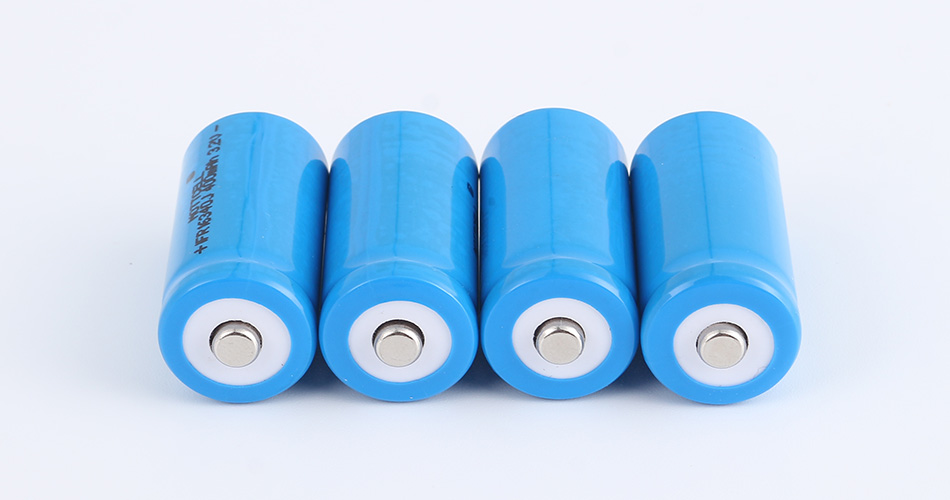
That string of numbers—16340—isn’t a random product code. It’s a simple blueprint for the battery's physical dimensions: 16 millimeters in diameter and 34.0 millimeters long. This naming convention gives manufacturers and consumers a universal language for size, ensuring the battery you buy will physically fit in your device.
Placing it next to a familiar AA battery, the 16340 is noticeably shorter and slightly wider. Despite its compact frame, it delivers significantly more power. This is why it's the go-to choice for devices that need a strong burst of energy, like a high-intensity flashlight or a wireless security camera, which an ordinary alkaline battery often can’t sustain.
You'll often find this size sold under different names, which can be confusing. The single-use, non-rechargeable version is typically called a CR123A. In the 16340 vs CR123A battery debate, the key is reusability. Both the 16340 and the RCR123A are rechargeable lithium-ion versions of the same cell—the 'R' simply stands for rechargeable. If you want a battery you can use again and again, look for the 16340 or RCR123A name.
If you could unwrap a 16340 battery, you would discover three key components stacked in a super-thin sandwich. The first layer is the cathode, the positive (+) side of the battery. Next is the anode, the negative (-) side. Squeezed between them is a microscopic, porous sheet called a separator. Its only job is to act as a safety barrier, preventing the positive and negative sides from touching, which would cause a short circuit.
To fit these long, flat layers into a tiny cylinder, manufacturers use a clever trick. A machine takes the layered "sandwich" and rolls it up tightly, exactly like a jelly roll. This battery jelly roll is the core of the cell, an ingenious way to pack the maximum amount of power-storing surface area into a minimal amount of space. This efficient rolling process is a cornerstone of modern lithium-ion cylindrical cell production, turning flat sheets into a dense spiral of potential energy. The chemical coatings on those sheets are what actually hold and release the energy, and it all starts with a very precise, high-tech recipe.
The journey from raw powder to a power-packed coating begins in what looks like a high-tech industrial kitchen. Here, various fine powders—graphite for the anode, and a blend of lithium and other metals for the cathode—are poured into giant, automated mixers. A solvent is added, and the machines whir to life, blending everything into a thick, uniform, and dark liquid called a slurry. It resembles a perfectly smooth, high-tech pancake batter, but instead of making breakfast, this mixture is designed to store and release electrical energy.
A battery needs both a positive and negative side, so the factory makes two completely different slurry recipes. One batch, the cathode slurry, contains the specific materials for the positive side of the "jelly roll." A separate batch, the anode slurry, is mixed with graphite for the negative side. Each recipe is measured with extreme precision, as even a tiny error can ruin thousands of potential batteries down the line.
Getting this mix exactly right is one of the most critical steps in the entire process. An uneven slurry with clumps or the wrong thickness will create a battery that can't hold a charge properly or will have a much shorter lifespan. Once this "secret sauce" is mixed to perfection and flawlessly smooth, it's ready for the next stage.
That perfectly mixed slurry now moves to the automated battery assembly line, where the dark, thick liquid is applied to massive, glistening rolls of metal foil. The machine spreads a perfectly even layer onto a strip of foil that’s hundreds of meters long. The factory does this for both slurries: the negative anode slurry is coated onto copper foil, while the positive cathode slurry is applied to aluminum foil.
This precision is critical. The coating must be incredibly uniform, down to the microscopic level, because an uneven coating creates a battery that won’t charge or discharge evenly. These imperfections prevent energy from being stored or released efficiently, leading to a shorter lifespan and poor performance.
Once coated, the wet foils immediately glide through extremely long drying ovens. These high-tech tunnels bake the slurry at a precise temperature, evaporating the solvent and leaving a dry, stable layer of active material bonded to the foil. What emerges on the other side are huge rolls of what looks like dark, matte paper, but is actually the heart of the future battery.
The two coated sheets are now brought together like a sandwich. An automated machine on the assembly line precisely stacks them: the negative anode, a thin separator, the positive cathode, and a second separator. This layering is critical, as the separators form a safety barrier. They prevent the powerful positive and negative materials from touching, which would cause an instant failure and a defective cell—a key focus of cylindrical battery quality control.
This long, flat power sandwich is fed into a high-speed winder. The machine rapidly rolls the sheet around a central pin, much like making a tiny Swiss roll, creating the dense ‘jelly roll’ that gives the battery its classic cylindrical shape. It’s this process that packs a huge surface area of power-storing material into such a compact form.
This compact design is how so much energy gets packed into a small space. The separator layers are the unsung heroes here, guaranteeing the positive and negative sides stay safely apart even when rolled tightly. Without them, the battery would instantly short-circuit. The finished roll is now a stable power unit, ready to be placed inside its metal can.
With the delicate power sandwich now rolled tight, an automated process inserts each jelly roll into an empty, gleaming steel can—the shiny cylinder we all recognize as the battery’s body. At this stage, the can is still open at the top, like a tiny metal cup holding a dry, powerless spiral. This steel shell provides the structural integrity needed to protect the delicate layers inside.
A dry roll can't generate power. To fix this, a precise amount of a special liquid, the electrolyte, is injected into the can. Think of this fluid as a superhighway. It doesn't store any power itself, but it creates a path for tiny power-carrying particles (called ions) to travel between the negative and positive layers of the roll. Without this highway, there’s no flow, and no electricity.
Once the electrolyte has fully soaked into the layers, the cell is ready to be sealed for good. A machine places a cap assembly—which includes the positive terminal—onto the can and uses immense pressure to crimp it shut. This creates a permanent, airtight seal, locking the liquid electrolyte in and keeping contaminants out. The battery now looks complete, but it’s still dormant.
A battery that rolls off the assembly line looks ready, but it’s essentially asleep. To bring it to life, it must go through a critical process called formation. This is the battery cell’s first-ever charge, and it’s done slowly and with extreme precision. This gentle “first workout” isn’t just about putting power in; it creates a microscopic, permanent protective shield inside the cell. This shield is vital, as it dictates how many times the battery can be recharged and how safely it will operate for the rest of its life.
Following their initial charge, the new batteries enter a quiet "aging" phase, where they are stored on racks for days or even weeks. During this time, they are constantly monitored to see if they hold their charge properly. This step is a crucial quality control method that weeds out any duds or defective cells, ensuring only the most stable and reliable batteries make it to consumers.
This two-part finale of formation and aging is completely invisible to us, but it’s what transforms a simple metal can into a dependable power source. It’s a painstaking investment in safety and longevity, guaranteeing that the tiny battery cell can handle the demands of our high-tech devices.
The next time you pick up a high-performance flashlight or check a wireless camera, you'll see more than just a battery; you'll see a feat of engineering. The journey from raw powder to a precisely wound 'jelly roll' of power is a testament to the blend of chemistry and mechanics required to create these miniature power plants.
That tiny cylinder is a story of precision, from the flawlessly mixed slurry to the final formation charge that brings each cell to life. Understanding the intricate process behind the 16340 battery offers a new appreciation for the incredible engineering that powers our modern world.
Related News
Common Small Battery Types Explained: Industrial Sourcing Guide
Industrial 18650 Cylindrical Battery Factory: Dual-Technology Bulk Production for Global Markets
Leading 18650 Rechargeable Battery Manufacturer for OEM Projects
16340 LiFePO4 Battery Factory: Quality & Innovation
High-Quality 3.2V 16340 Lithium Ion Battery Factory
Top 16340 LiFePO4 Battery Supplier: Quality & Reliability
High-Quality 3.2V 16340 Lithium Ion Battery Factory
48V 300Ah HESS Supplier: Voltage, Runtime and OEM Guide
48V 100Ah HESS Supplier: 5.12kWh Solar OEM Buying Guide
12.8V 200Ah Battery Pack Factory: OEM Sourcing Guide
Commercial HESS Supplier: Factory Microgrid Sizing Guide
51.2V HESS Battery Supplier: 100Ah to 314Ah Capacity Guide
12V LiFePO4 Battery Pack Manufacturer: 50Ah-314Ah OEM Guide
16kWh HESS Supplier: 51.2V 314Ah Buyer’s Guide
5kWh HESS Supplier: Indoor Modular Battery Buying Guide
Established in 2005
In 2009, it was awarded the title of "National High tech Enterprise"
 zoe@mottcell.net
WhatsApp: 8617388790296
Fax: 86-0755-84042963
Skype: live:b0ebaecbb8782516
WeChat: +8613428749632

 VR show
 CN
CN Home >


