
 Jan 09, 2026


Ever bought a new gadget, like a high-powered flashlight, only to discover it needs a weird '16340' battery? If that number looks like confusing jargon, you’re not alone. This simple guide will show you what is a 16340 battery and how to pick a safe one.
That strange number is actually the simplest thing about it. A 16340 cylindrical battery gets its name directly from its size: it is 16mm wide and 34mm long. You’ll often see it sold as a rechargeable ‘RCR123A,’ which is just another name for the same powerful cell.
As you can see, a 16340 is smaller than a standard AA but packs a much bigger punch. While a typical AA battery offers 1.5 volts of power, a 16340 delivers 3.7 volts—more than double. This is the kind of energy modern, high-performance devices demand.
With that extra power comes a critical need for quality. In practice, the difference between a long-lasting battery and a dangerous dud often comes down to the company that made it. Choosing the right manufacturer is the most important step for ensuring both safety and reliable performance.
When searching for 16340 batteries, you'll almost certainly run into their lookalike twin: the CR123A. They are the same size and shape, leading many to believe they are interchangeable. While the 16340 (sometimes called an RCR123A) is rechargeable, the CR123A is a disposable, single-use battery. This is the first of several critical 16340 vs CR123A differences, but it isn’t the most important one.
The crucial distinction is voltage. Think of voltage as electrical "pressure." A disposable CR123A provides about 3.0 volts of pressure. Your rechargeable 16340, however, pushes out a much higher 3.7 volts when fully charged. For devices not built to handle that extra pressure, the consequences can be immediate and permanent.
Using a higher-voltage 16340 in a device designed only for a 3.0V CR123A can instantly fry its sensitive electronics. It’s like connecting a fire hose to a garden sprinkler—the system gets overwhelmed and breaks. This is why you can’t treat them as simple RCR123A battery alternatives without checking first. Your expensive flashlight or camera could be ruined in a second.
So, how do you know if it’s safe? The golden rule is simple: only use a 16340 battery if your device's manufacturer specifically states it is compatible with both CR123A and 16340 cells. If the manual doesn't say so, assume it’s a no-go. This voltage risk is also why the battery’s internal safety features are so vital, which leads us to the single most important factor to look for.

With the extra power 16340 batteries provide, safety becomes the top priority. This brings us to the most critical detail to look for: a protection circuit. Think of a protected battery as having a tiny, built-in safety guard. This miniature circuit board is added by the manufacturer to constantly monitor the battery and automatically shut it off before a dangerous situation can develop.
This internal guard is specifically designed to prevent the three main causes of lithium-ion battery failure. When people ask, “are 16340 batteries safe?” the answer largely depends on whether this protection is in place.
A protected battery prevents:
Over-charging: Stops the battery from accepting too much power during charging, which can cause overheating and damage.
Over-discharging: Shuts the battery off before its power level drops too low, which can permanently kill the cell.
Short-circuits: Instantly cuts the power if the positive and negative ends touch, preventing a sudden, dangerous release of energy that can cause a fire.
For the vast majority of users, the choice is clear. Unprotected batteries are intended for experts building custom electronics who use separate, external safety monitoring. For your flashlight, camera, or other consumer device, you should always choose a protected 16340 cell. They are often clearly labeled "Protected" and may be a millimeter or two longer to make room for the safety chip.
By selecting a protected battery from a quality manufacturer, you ensure that your high-performance device operates both effectively and safely. Once you've locked in that peace of mind, the next factor to consider is runtime: how long your device will last on a single charge. This is measured by a rating called "mAh."
Once you've ensured your battery is protected, you'll want it to last as long as possible. On the battery’s label, you'll see a number followed by "mAh," such as 700mAh. This stands for milliampere-hours, but it’s easiest to think of it as the size of the battery's fuel tank. A higher mAh number means a bigger tank, which translates to a longer runtime for your device before it needs a recharge. For a demanding device, like a high drain 16340 battery for flashlights, this is a critical factor.
This might tempt you to simply buy the battery with the biggest mAh number, but this is exactly where shoppers get misled. An unfortunate reality is that many unknown brands print wildly exaggerated numbers on their labels. A cheaply made battery advertised as "1200mAh" will often hold less charge and die faster than an honestly rated 700mAh cell from a reputable company. This is a key part of learning how to choose a 16340 battery: you must look past the marketing.
Here is a simple but powerful rule to help you spot fakes: be extremely skeptical of any 16340 battery advertised with a capacity much higher than 850mAh. Current technology simply doesn't allow for more in a cell this size. Seeing a huge number is a major red flag. Since you can't always trust the printed 16340 battery capacity and voltage figures, your best guarantee of quality and safety comes from choosing a trustworthy manufacturer.
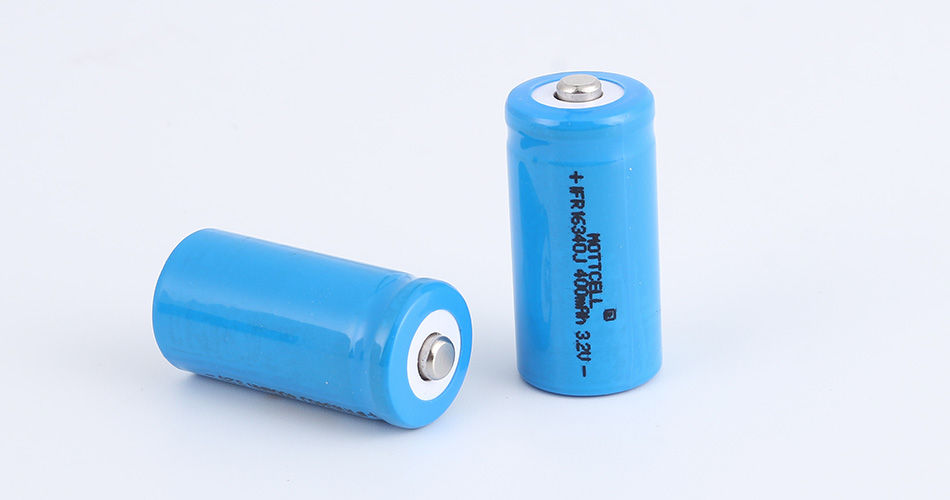
So if you can't always trust the numbers printed on the label, what can you trust? The answer is the manufacturer's reputation. Think of it like buying food: one brand uses high-quality ingredients and has a spotless kitchen, while another cuts corners to be cheaper. With powerful lithium-ion batteries, the stakes are much higher than just a bad meal; they’re about safety and reliability.
The difference comes down to what happens inside the factory. A proper 16340 cylindrical battery manufacturer invests heavily in quality control. A brief lithium battery manufacturing process overview would reveal dozens of checkpoints, from verifying the purity of the raw materials to testing each cell's performance before it leaves the facility. Cheaper producers often skip these critical steps, using lower-grade materials and performing minimal testing, which leads to inconsistent performance and potential safety hazards.
For you, this behind-the-scenes quality directly impacts the features you rely on. That "Protected" circuit is only as reliable as the company that designed and installed it. Reputable brands also source their core components from top li-ion battery cell suppliers, ensuring the mAh capacity they print is honest and the battery will hold a charge cycle after cycle. A cheap, unprotected battery from an unknown maker is a gamble every time you use it.
Ultimately, you should think of the brand name not as a luxury, but as a crucial component of the battery’s safety system. It represents a promise of quality control and accountability. Instead of chasing the highest (and likely fake) mAh number, the smarter question to ask is, "Which manufacturer has a proven track record for safety and honesty?"
Okay, so you know to look for a reputable brand. But when you search online, you're hit with dozens of names you've never heard of. How do you separate the dependable players from the duds hiding behind flashy labels and too-good-to-be-true promises?
Thankfully, you don't need to be an expert. When figuring out how to choose a 16340 battery, you can use a quick three-point check to gauge a brand's trustworthiness before you decide where to buy quality 16340 batteries.
How to Vet a Manufacturer:
Is the brand respected in enthusiast communities? Search for the brand name in places like flashlight or photography forums. These users depend on quality and are quick to call out bad products.
Do they list safety certifications? A trustworthy brand’s website or packaging will proudly display marks like CE or UL. These aren't just letters; they mean the battery has been independently tested to meet important safety standards.
Are there independent tests or video reviews? Look for reviews on YouTube or specialty tech websites. These are often more reliable than a sea of anonymous marketplace comments.
A brand that passes these checks is making a public commitment to quality. Investing a few minutes in this research ensures you get one of the best RCR123A battery brands (another common name for 16340s). Once you’ve made your choice, the next step is keeping your new battery safe and effective for years to come.
Owning a great battery is only half the battle; how you charge it is just as crucial. The most important part of this rechargeable 16340 battery charging guide is simple: invest in a quality “smart” charger from a reputable brand. Unlike a simple phone charger, a smart charger communicates with the battery. It monitors temperature and voltage, delivering power safely and automatically shutting off when the battery is full. This prevents overcharging, the number one cause of damage and a serious safety risk.
Beyond the charger, a few common-sense habits will protect both you and your investment. Always charge your batteries on a hard, non-flammable surface like a countertop—never on a bed or couch. Give them some breathing room away from flammable materials, and avoid leaving them to charge unattended for extended periods, like overnight. These simple steps not only prevent accidents but also help you meet the best 16340 battery life cycle standards, ensuring your batteries last as long as possible.
You might also see a 16340 battery with a built-in USB port. These can be incredibly convenient for travel, as you don’t need to carry a separate charger. However, there’s a trade-off. The charging electronics crammed into that tiny battery are often less sophisticated than those in a dedicated smart charger. They are a great backup option, but for regular home charging, a separate, high-quality charger is almost always the safer and more reliable choice.
Now that you know how to choose a quality battery and charge it safely, you’re ready to make a confident purchase.
That confusing string of numbers—16340—is no longer a random code. You now understand that it describes a small but mighty power source, and more importantly, you know that the secret to using it safely lies not in the battery itself, but in the reputation of the manufacturer who made it.
When you're ready to purchase, your new knowledge makes the process simple. Here is your clear, three-step plan for how to choose a 16340 battery that's both safe and reliable.
Confirm Your Device Needs a 16340/RCR123A: Check your device's manual to ensure it’s compatible with the higher voltage of a rechargeable cell.
Prioritize Safety: 'Protected' Cells Only: When searching, filter for "Protected" 16340 batteries to get the built-in safety chip.
Choose a Reputable Manufacturer: Look for the best RCR123A battery brands (like Nitecore, Fenix, Olight, or Keeppower) and purchase from an authorized dealer, not a random marketplace seller.
You’re no longer just buying a battery; you’re making a smart investment in your gear's performance and your own peace of mind. You aren't guessing anymore—you're making an informed choice. Power your device with confidence.
48V 300Ah HESS Supplier: Voltage, Runtime and OEM Guide
48V 100Ah HESS Supplier: 5.12kWh Solar OEM Buying Guide
12.8V 200Ah Battery Pack Factory: OEM Sourcing Guide
Commercial HESS Supplier: Factory Microgrid Sizing Guide
51.2V HESS Battery Supplier: 100Ah to 314Ah Capacity Guide
12V LiFePO4 Battery Pack Manufacturer: 50Ah-314Ah OEM Guide
16kWh HESS Supplier: 51.2V 314Ah Buyer’s Guide
5kWh HESS Supplier: Indoor Modular Battery Buying Guide
Established in 2005
In 2009, it was awarded the title of "National High tech Enterprise"
 zoe@mottcell.net
WhatsApp: 8617388790296
Fax: 86-0755-84042963
Skype: live:b0ebaecbb8782516
WeChat: +8613428749632

 VR show
 CN
CN Home >


