
 Nov 24, 2025


In a world that increasingly relies on portable electronics and sustainable energy solutions, the demand for efficient and reliable power sources is ever-growing. One of the key players in this domain is the AA lithium-ion battery, renowned for its high energy density and long lifecycle. But what goes into making these powerful little cells? Let's take a closer look at the intricate world of AA lithium-ion battery manufacturing.
Before delving into the manufacturing process, it's essential to understand the basic technology behind lithium-ion batteries. Lithium-ion batteries are a type of rechargeable battery commonly used in consumer electronics, electric vehicles, and renewable energy systems. They are favored for their lightweight nature, high energy efficiency, and minimal memory effect.
A lithium-ion battery consists of several key components: an anode, a cathode, an electrolyte, and a separator. During discharge, lithium ions move from the anode to the cathode through the electrolyte, generating an electric current. When the battery is charged, the ions move back to the anode, ready to repeat the cycle.
This technology allows lithium-ion batteries to store and deliver energy efficiently, making them ideal for various applications.

Creating AA lithium-ion batteries involves several meticulous steps, each crucial for ensuring the quality and performance of the final product.
The first step in battery manufacturing involves sourcing and preparing raw materials. High-purity lithium compounds, such as lithium carbonate or lithium hydroxide, are essential for creating the cathode material. Similarly, graphite or silicon is used for the anode. These materials are processed to achieve the desired particle size and purity.
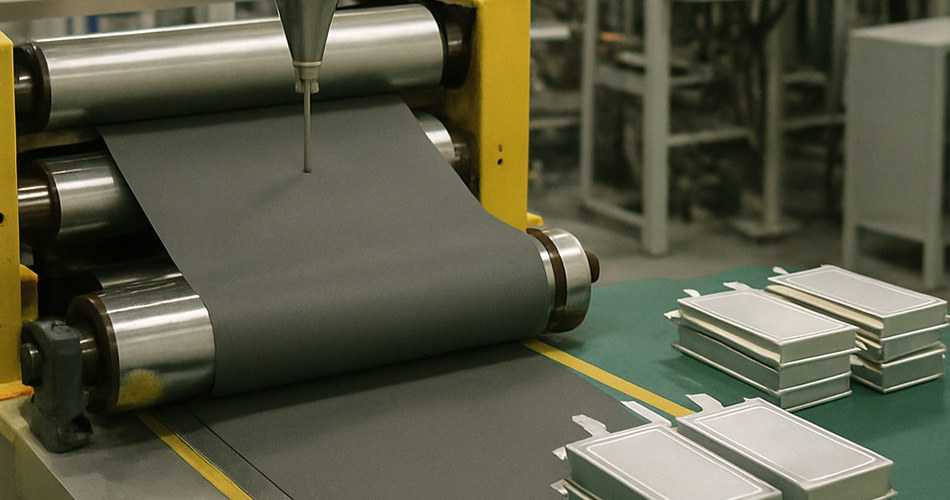
Once the raw materials are ready, the next step is electrode production. This process involves coating the anode and cathode materials onto thin metal foils, typically aluminum for the cathode and copper for the anode. The coated foils are then dried and compressed to ensure even distribution and optimal conductivity.
With the electrodes prepared, the next phase is cell assembly. Here, the anode and cathode are layered with a separator to prevent direct contact while allowing ion flow. This assembly is then rolled or stacked, depending on the cell design, and inserted into a cylindrical or prismatic casing.
The assembled cell is filled with an electrolyte solution, which facilitates the movement of ions between the electrodes. After filling, the cell is hermetically sealed to prevent leakage and contamination. This step is critical for ensuring the battery's safety and longevity.
Once sealed, the battery undergoes a formation process. This involves charging and discharging the cell several times to stabilize its chemistry and establish its capacity. After formation, the batteries are aged for a specific period to ensure they meet performance standards.
Quality control is a vital aspect of battery manufacturing. Each battery must undergo rigorous testing to ensure it meets safety and performance criteria. This includes checking for defects, measuring capacity, and conducting safety tests such as overcharge and short-circuit testing.
Lithium-ion batteries are subject to strict safety regulations due to their chemical composition. Manufacturers must adhere to guidelines for safe handling, storage, and disposal of materials. Additionally, environmental considerations are paramount, with efforts to minimize waste and recycle materials wherever possible.
As technology advances, battery manufacturers are continually seeking ways to improve the efficiency and sustainability of lithium-ion batteries. Research is underway to develop new materials that offer even higher energy densities and faster charging times. Additionally, innovations in manufacturing processes aim to reduce costs and environmental impact.
Automation plays a significant role in modern battery manufacturing. Automated systems enhance precision, reduce human error, and increase production speed. Robotics and advanced software are used to handle delicate tasks, ensuring consistent quality and efficiency.
Sustainability is a growing focus in the industry. Manufacturers are exploring eco-friendly materials and energy-efficient production methods. Recycling initiatives are also being implemented to recover valuable materials from spent batteries, reducing the demand for new raw materials.
The AA lithium-ion battery factory is a hub of innovation and precision, where cutting-edge technology meets meticulous craftsmanship. From raw material preparation to the final product, each step in the manufacturing process is crucial for creating batteries that power our modern world. As the demand for portable and sustainable energy solutions continues to rise, the evolution of battery technology promises to shape a brighter, more efficient future for us all.
24V Battery Pack: Industrial Power for AGV and Solar
24V Battery Pack Manufacturing: Grade A LiFePO4 Precision | Mottcell
Choosing the Best 12.8V Battery Pack: 10-Year ROI Guide | Mottcell
12.8V Battery Pack Manufacturing | 50Ah to 314Ah LiFePO4 | Mottcell
12.8V LiFePO4 Battery Performance: 50Ah-314Ah Specs | Mottcell
12.8V Battery Pack for RV, Marine & Solar | High-Capacity 314Ah | Mottcell
12V Lithium Battery Pack Guide | 100Ah, 200Ah, 280Ah to 314Ah
12V Lithium Battery Pack Manufacturer | 100Ah-314Ah Custom Solutions
Established in 2005
In 2009, it was awarded the title of "National High tech Enterprise"
 zoe@mottcell.net
WhatsApp: 8617388790296
Fax: 86-0755-84042963
Skype: live:b0ebaecbb8782516
WeChat: +8613428749632

 VR show
 CN
CN Home >


