
 Jun 06, 2026


In the rapidly modernizing industrial procurement ecosystem of 2026, enterprise sourcing managers, engineering directors, and factory owners face a critical structural shift. The transition away from legacy lead-acid and cheap, unvetted energy storage options has accelerated. For operations utilizing automated guided vehicles (AGVs), heavy material handling equipment, marine fleets, or decentralized backup grids, energy infrastructure directly dictates overall operational efficiency. At the center of this movement is the industrial-grade 12v battery pack, which serves as a vital low-to-medium voltage building block for global B2B operations.
Sourcing energy assets at an enterprise scale requires navigating a complex global supply chain. B2B buyers cannot afford to treat battery procurement as a routine, off-the-shelf transaction. Low-tier, unvetted consumer packs frequently suffer from wide cell capacity variances, fragile internal connections, and basic analog battery management systems (BMS) that fail under heavy workloads.
To eliminate premature failures and maximize equipment lifespan, industrial procurement teams must establish wholesale partnerships directly with original equipment manufacturers (OEMs). Sourcing factory-direct ensures complete traceability, custom electromechanical engineering, and verified international regulatory compliance.
For factory procurement teams, selecting an industrial energy partner requires balancing technical parameters against long-term operational costs. When deploying mid-voltage hardware across thousands of field units or factory floor assets, unverified supply chains present significant corporate liabilities.
The Risk of Unvetted Cell Discrepancies: Many wholesale trading houses assemble battery modules using B-grade or mixed-production cells to lower upfront costs. This introduces micro-ohm resistance variances and millivolt capacity mismatches. Under high continuous currents, these variations cause severe localized heat spots, forcing early balancing cut-offs and reducing the usable capacity of your investment.
The Regulatory Compliance Bottleneck: Deploying industrial hardware into international markets requires strict compliance with international safety and transport mandates. Sourcing uncertified packs leads to costly customs delays, shipping rejections, or high industrial insurance premiums. Large lithium installations holding substantial energy reserves must hold full certifications under UN38.3 (global transport safety standard), CE compliance, and UL standards (such as UL1973 for stationary energy reserves or UL2580 for electric vehicle drivetrains).
Engineering Integration Hurdles: Every automated factory floor and material handling chassis features unique spatial constraints and specialized communication networks. Off-the-shelf battery packs force engineers to redesign existing equipment compartments or build complex external step-down converters. True B2B sourcing requires complete configuration flexibility, allowing buyers to select precise housing layouts, connector types, and digital communication protocols (such as CANbus, RS485, or Modbus) to match their machinery.
To maximize the performance of a 12v battery pack across a commercial infrastructure, procurement managers must match cell capacities to the specific workload requirements of their hardware. Sourcing teams can review precise technical layouts and advanced electrochemical parameters by accessing our team's primary industry guide to
The industrial application spectrum is categorized across five core capacity tiers, each engineered to address specific commercial power envelopes:
| Wholesale Product Model | Usable Energy Reserves (Wh) | Continuous Current Limit (A) | Primary B2B Fleet Allocation Targets | Sourcing Rationalization |
| 12v 100ah battery pack | 1,280 Wh (1.28 kWh) | 100A Continuous / 200A Surge | Light Factory AGVs, Autonomous Oceanographic Buoys, Isolated Scada Nodes | Minimizes physical weight and space constraints while ensuring long shift performance. |
| 12v 200ah battery pack | 2,560 Wh (2.56 kWh) | 150A Continuous / 300A Surge | Commercial Scissor Lifts, Electric Pallet Jacks, Distributed Remote Radar Stations | Balances mobility weight restrictions with heavy multi-hour continuous discharge profiles. |
| 12v 280ah battery pack | 3,584 Wh (3.58 kWh) | 200A Continuous / 400A Surge | Medium Material Handling Tuggers, Backup Telecom Nodes, Heavy Marine Auxiliary Banks | Maximizes deep-cycling longevity for high-use facility hardware and critical backups. |
| 12v 300ah battery pack | 3,840 Wh (3.84 kWh) | 200A Continuous / 500A Surge | Large Airport Luggage Tractors, Long-Duration Commercial Refrigeration, Process Automation Grids | Supports high peak surge currents without inducing internal cell thermal stress. |
| 12v 314ah battery pack | 4,019 Wh (4.01 kWh) | 250A Continuous / 600A Surge | Next-Generation Ultra-High-Density ESS Blocks, High-Payload Heavy Robotics | Provides a 12% boost in total runtime capacity within an identical legacy physical footprint. |
The introduction of the 314Ah cell tier represents a major milestone for industrial equipment designers. Historically, expanding asset runtime required expanding physical battery compartments or accepting the weight penalties of transitioning to higher-voltage series strings.
By upgrading to the high-density 314Ah standard, factories can boost equipment operation windows by 12% within an identical mechanical footprint, maximizing shift throughput and reducing charging station bottlenecks.
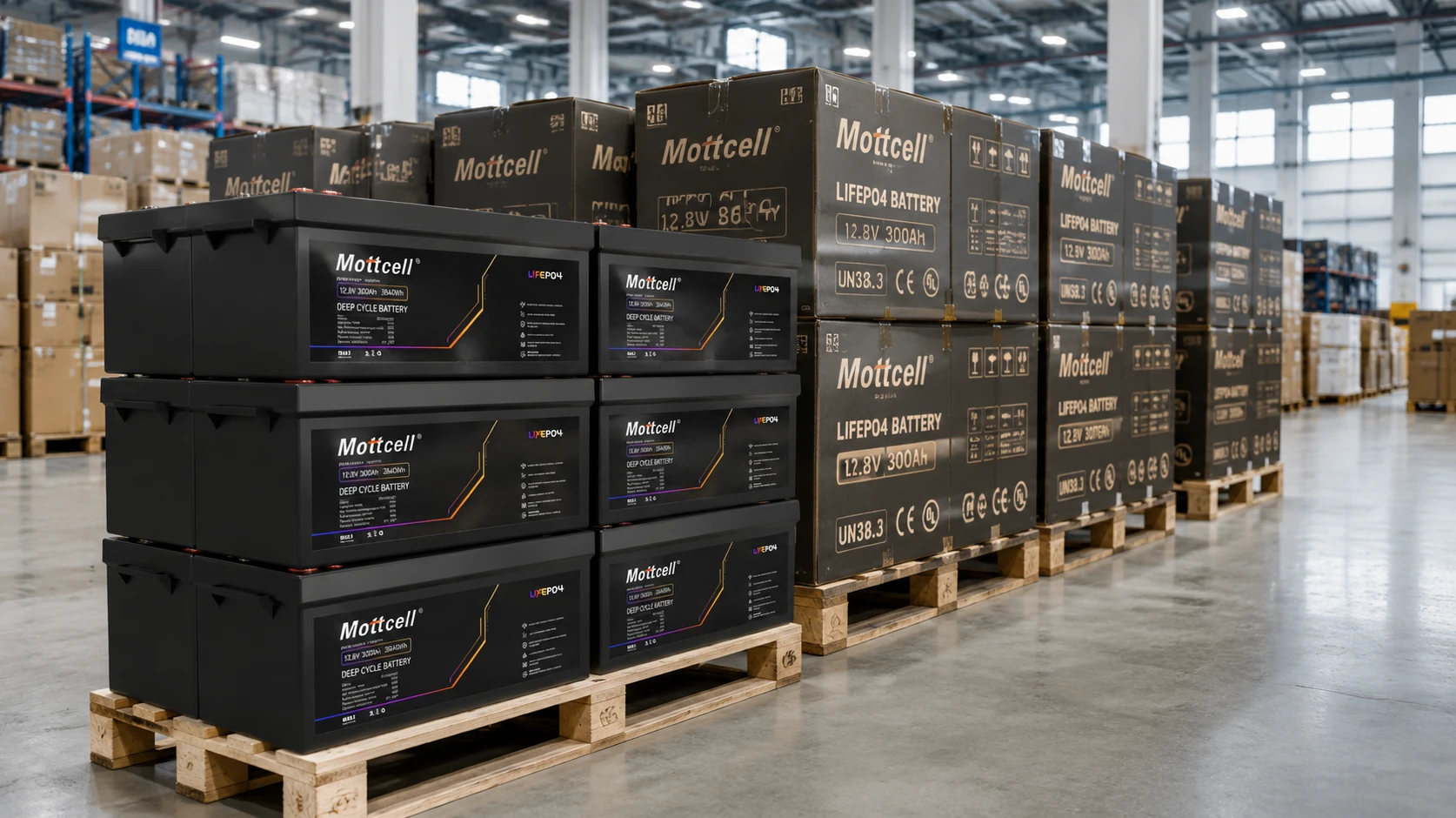
When conducting factory audits or reviewing supplier profiles, engineering executives must look beyond simple price matrices. Sourcing high-capacity lithium modules requires selecting supply chain partners that operate advanced, fully automated manufacturing infrastructures.
To guarantee stable field performance, B2B buyers should evaluate three main engineering disciplines during their vetting process:
Industrial battery modules are only as reliable as the weakest cell in their series string. If an assembly plant utilizes manual voltage matching or groups mismatched cells, the pack will quickly suffer from voltage drift under continuous loads.
Authoritative manufacturing partners implement multi-stage automated sorting systems that screen cells for Open Circuit Voltage (OCV) and Alternating Current Internal Resistance (ACIR) down to single-digit millivolt and micro-ohm thresholds. Enterprise buyers can evaluate these automated assembly metrics by reading our complete analysis of
Traditional manual workshops rely on threaded mechanical fasteners or basic spot welding to link cells together. Over long-term field use, constant equipment vibration loosens mechanical bolts, increasing contact resistance and creating localized thermal hazards.
Advanced production lines utilize computerized robotic laser fusion welding to create permanent metallurgical bonds between cell terminals and heavy copper busbars. This automated process minimizes internal connection resistance, ensures uniform electrical conductivity, and protects the pack from heavy mechanical shock.
A trustworthy wholesale supplier must provide verifiable testing documentation for all finalized assemblies. Sourcing teams must ensure their supplier provides comprehensive UN38.3 transport testing records, CE markings, and UL verification reports. This documentation ensures smooth customs processing, facilitates international logistics, and satisfies commercial liability insurance requirements.
Enterprise sourcing managers often discover that generic battery configurations fail to meet the performance criteria of specialized industrial machinery. Partnering with a dedicated factory allows procurement teams to customize electromechanical designs to fit their specific operational needs.
Depending on the target operating environment, external enclosures can be customized using precision CNC-machined aluminum or powder-coated, cold-rolled sheet steel. For high-moisture or wash-down environments, factories apply automated pour-in-place polyurethane gaskets to achieve verified IP65 or IP67 ingress protection ratings.
Additionally, for operations in extreme northern climates or cold-storage facilities, enclosures can be integrated with automated internal heating blankets. When the system detects a sub-freezing environment during a charge cycle, the BMS redirects power to warm the internal heating plates first, safely bringing the cell matrix up to optimal temperatures before allowing current into the cells.
Every industrial-grade 12v battery pack requires a programmable Smart BMS that serves as the central electronic governor for the cell core. The BMS monitors vital operational parameters, including individual cell voltages, pack temperature strings, and real-time current flows, executing millisecond-level protective cut-offs if parameters cross safe limits.
To support automated fleet tracking, the BMS can be configured with standardized digital communication protocols, including CANbus, RS485, and Modbus networks. This allows your machinery's central controller or a remote IoT dashboard to track state of charge (SOC) and state of health (SOH) data in real time, enabling predictive maintenance and reducing unexpected downtime. To see how these smart modules scale into larger configurations, explore our complete
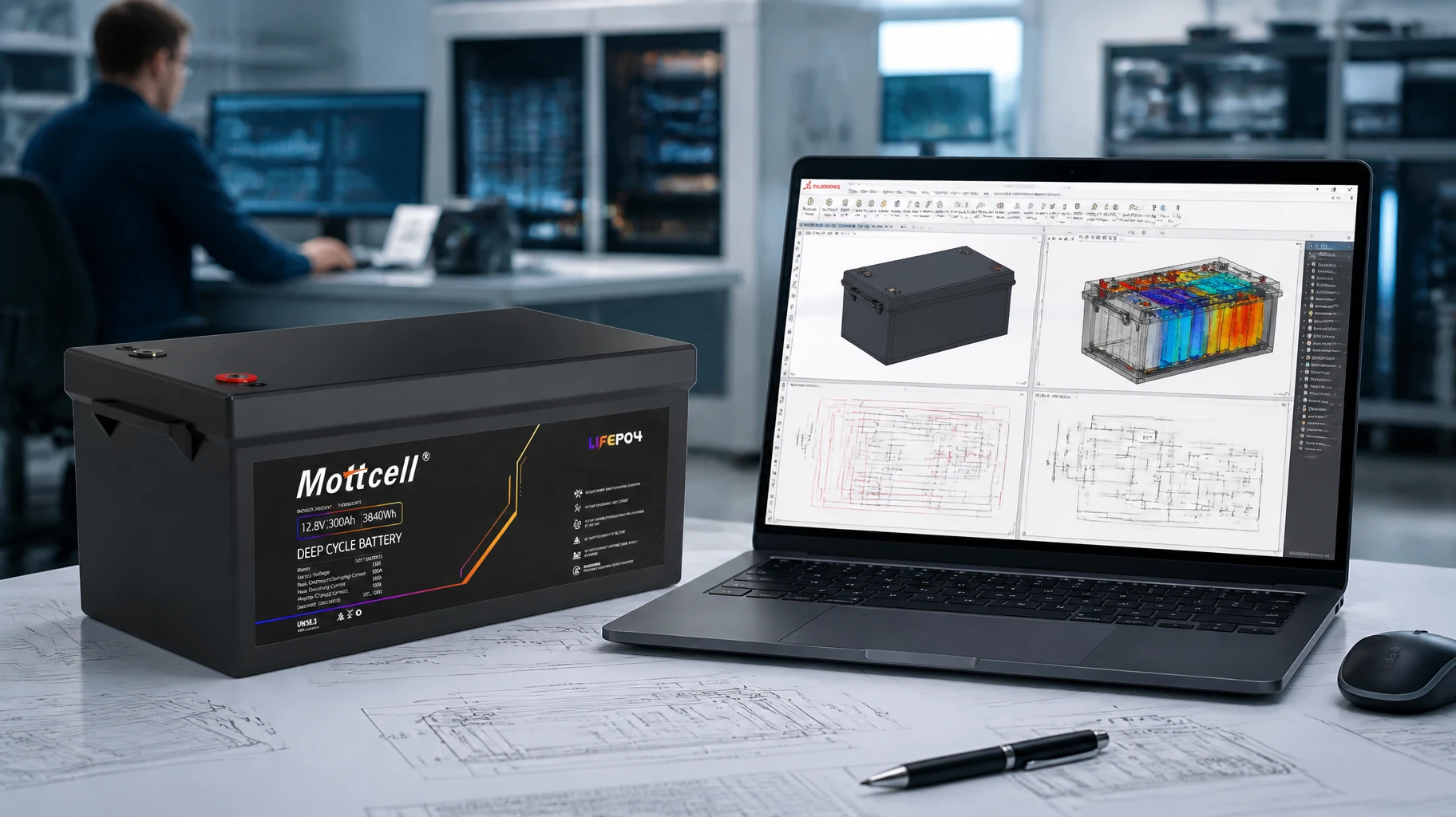
From a corporate financial perspective, evaluating energy storage solutions requires analyzing long-term lifecycle economics rather than focusing solely on upfront acquisition costs. While cheap, uncertified alternatives present an appealingly low initial Capital Expenditure (CapEx), they introduce heavy long-term Operational Expenditure (OpEx) through frequent field service, premature replacements, and expensive equipment downtime.
| Strategic Procurement Metric | Low-Cost Standard Import Pack | Mottcell Factory-Direct Solution |
| Initial Procurement CapEx | Low upfront cost barrier | Optimized professional asset value tier |
| True Operational Lifespan | 1,500 to 2,000 standard cycles | 6,000+ deep discharge cycles (Grade A) |
| Field Maintenance OpEx | High replacement labor frequencies | Zero-maintenance sealed housing design |
| Telemetry & System Vetting | Simple analog cut-off layers only | Programmable CANbus / RS485 data streams |
| Asset Failure Financial Risk | Elevated sudden field failure profile | Low risk via live diagnostic tracking |
Quantifying long-term ROI requires analyzing the cost-per-kilowatt-hour delivered over the lifetime of the asset. A premium 12v battery pack built with authentic Grade A prismatic cells provides more than 6,000 deep charge-discharge cycles before its capacity degrades to 80% of its initial value.
Under identical industrial duty cycles, conventional lead-acid options rarely survive past 1,500 cycles, meaning a single Mottcell deployment outlasts multiple lead-acid change-out rounds, eliminating repeat procurement and maintenance cycles.
Furthermore, upgrading a large multi-pack configuration from lead-acid to lithium reduces total battery weight by up to 70%, immediately lowering fuel or electricity consumption, improving vehicle acceleration, and freeing up structural capacity for commercial cargo or functional tooling equipment.
For specialized marine and harsh-environment applications requiring extreme water resistance and deep cycling profiles, sourcing managers can read our dedicated application study covering the
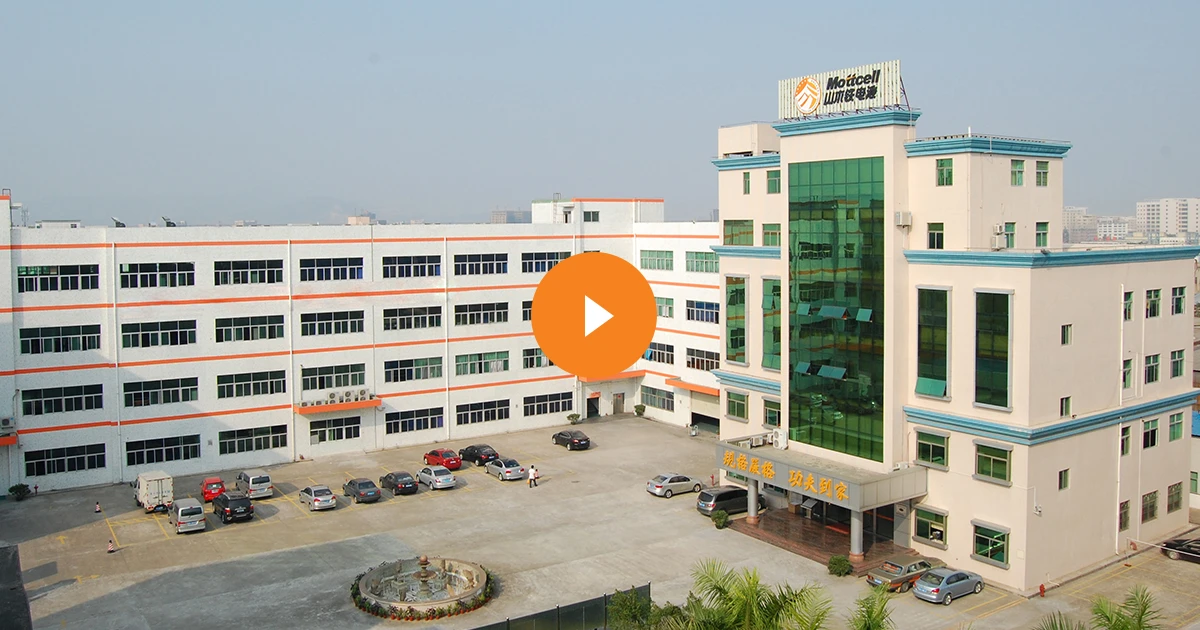
Sourcing direct from a certified manufacturer ensures your enterprise receives complete testing documentation, including UN38.3 transport records, CE compliance markings, and UL certificates. This full traceability protects your company from customs delays, eliminates international shipping liabilities, and satisfies commercial insurance requirements for large facility rollouts.
A generic battery cannot communicate with system controllers, which can lead to unexpected equipment shutdowns. An industrial module utilizes a programmable Smart BMS that streams real-time state of charge (SOC), cell voltage strings, and state of health (SOH) data via CANbus or RS485 protocols directly to your machinery's central controller or an external IoT dashboard, enabling predictive maintenance and eliminating mid-shift failures.
Because cells naturally exhibit microscopic variations in capacity and internal resistance out of raw production, unvetted cell batches will experience rapid voltage divergence under heavy industrial loads, leading to premature pack failure. Mottcell's automated factory implements multi-stage OCV and IR testing matrices to match cells down to tight millivolt and micro-ohm thresholds, preventing capacity tracking errors and ensuring a stable service life of over 6,000 cycles.
Sourcing a wholesale commercial-grade 12v battery pack framework should never be approached as a generic procurement transaction. It represents a long-term investment in your enterprise's core operational infrastructure. By moving away from restrictive off-the-shelf catalog models and embracing a custom-engineered, factory-certified lithium configuration, you systematically eliminate design bottlenecks, secure your hardware supply chain, and maximize long-term operational ROI.
Mottcell combines advanced lithium engineering with full-service OEM/ODM customization to deliver high-performance power solutions that excel in demanding commercial environments. Ready to eliminate field failure risks, optimize your fleet's weight metrics, and secure a tailored production blueprint for your heavy machinery rollout? Please
48V 300Ah HESS Supplier: Voltage, Runtime and OEM Guide
48V 100Ah HESS Supplier: 5.12kWh Solar OEM Buying Guide
12.8V 200Ah Battery Pack Factory: OEM Sourcing Guide
Commercial HESS Supplier: Factory Microgrid Sizing Guide
51.2V HESS Battery Supplier: 100Ah to 314Ah Capacity Guide
12V LiFePO4 Battery Pack Manufacturer: 50Ah-314Ah OEM Guide
16kWh HESS Supplier: 51.2V 314Ah Buyer’s Guide
5kWh HESS Supplier: Indoor Modular Battery Buying Guide
Established in 2005
In 2009, it was awarded the title of "National High tech Enterprise"
 zoe@mottcell.net
WhatsApp: 8617388790296
Fax: 86-0755-84042963
Skype: live:b0ebaecbb8782516
WeChat: +8613428749632

 VR show
 CN
CN Home >


